


 英语
英语 俄语
俄语Cat:Virola
Descripción de los productos: 1. Materia prima: acero al carbono y acero inoxidable disponibles 2. Revestimiento estándar: revestimiento de z...
Ver detallesContenido
A standard hose fitting is a precision-engineered connector that joins a flexible hose to equipment, piping, or another hose segment while maintaining a leak-free seal under rated pressure, temperature, and chemical exposure. Standard fittings follow dimensional specifications defined by organizations such as ISO, SAE, DIN, and BSP, ensuring interchangeability across manufacturers and global supply chains.
Bottom line: selecting the correct industrial hose fitting — by thread standard, material, connection type, and pressure rating — is the single most consequential decision in any fluid conveyance system. A mismatched fitting is the leading cause of hose assembly failure, accounting for an estimated 70–80% of premature failures in hydraulic and pneumatic systems according to fluid power industry service data. The sections below give you the technical grounding to make that selection correctly every time.
This guide covers hose fitting fundamentals, connection types, material performance, sizing methodology, application-specific considerations, and installation best practices — drawing on established engineering standards and field experience across machinery, oil and gas, food processing, construction, and aerospace applications.
A standard hose fitting consists of three functional zones: the stem (the portion inserted into the hose bore), the body (the central structural element containing the flow path), and the end connection (the threaded, flanged, or quick-connect interface that mates with port or coupling). When a hose fitting is correctly installed, the stem grips and seals the hose inner liner, and the end connection seals against its mating port — creating a continuous, pressurized flow path with no external leakage.
The mechanical engagement between stem and hose bore is achieved by one of three methods: a swaged or crimped ferrule that compresses the hose onto the stem under controlled radial force; a reusable two-piece socket-and-nipple assembly tightened by hand or wrench; or a push-lock barb that relies on hose elasticity for retention at low-to-medium pressures. Each method has a defined working pressure range, and exceeding it is the most common single-point failure in fluid systems.
Thread sealing at the end connection is accomplished by one of four mechanisms: tapered thread interference (NPT, BSPT), parallel thread with face seal (ORFS, SAE 37° flare, DIN 24° cone), parallel thread with O-ring on thread (BSPP with bonded seal), or compression/bite-type ferrule (Swagelok-style). Understanding which sealing mechanism is in use on your system is essential before selecting a replacement fitting — substituting a face-seal fitting into a tapered-thread port destroys both components and creates an immediate leak path.
Fig. 1 — Field service data consistently shows that wrong fitting selection or thread standard mismatch is the dominant root cause of hose assembly failures, contributing to approximately 75% of premature failures in industrial fluid systems. Improper crimping is the second-largest factor at 35%, which is why calibrated crimping tools and manufacturer-specified die sets are non-negotiable in professional assembly. Understanding these statistics clarifies where engineering attention delivers the highest return: specification and installation quality, not simply material grade, are the controlling variables in hose fitting reliability.
Industrial hose fittings are classified along three independent axes: connection geometry (how the fitting joins to a port or another fitting), hose retention method (how the fitting grips the hose), and thread standard (which dimensional system governs thread pitch, taper, and sealing). Engineers must specify all three to define a fitting unambiguously.
Thread standard compatibility is the most frequent source of specification errors. The major standards in global industrial use are:
| Standard | Thread Profile | Sealing Method | Primary Region | Typical Max Pressure |
|---|---|---|---|---|
| NPT | Tapered 60° | Thread interference + sealant | North America | Up to 10,000 psi (with schedule) |
| BSPP | Parallel 55° | Bonded seal / face washer | Europe, Middle East, Asia | Up to 6,000 psi |
| SAE 37° JIC | Parallel 60° | 37° metal cone seat | North America, Global OEM | Up to 10,000 psi |
| ORFS (SAE J1453) | Parallel 60° | O-ring flat face seal | Global (high-pressure) | Up to 6,000 psi (standard O-ring) |
| DIN 24° (ISO 8434-1) | Parallel metric | 24° internal cone | Europe, Global construction | Up to 7,250 psi (L-series) |
A common question in industrial procurement: can hydraulic and pneumatic fittings be interchanged? The answer requires understanding the fundamental differences in system requirements. Hydraulic hose fittings operate in systems using incompressible oil at pressures typically ranging from 200 bar to 700 bar (3,000 psi to 10,000 psi). Pneumatic hose fittings operate in compressed air systems at much lower pressures — generally 6 to 12 bar (87 to 174 psi) — with a compressible medium.
The compressibility difference has a critical safety implication: a hydraulic fitting failure releases stored incompressible energy instantly as a high-velocity oil jet — a severe injury hazard. A pneumatic fitting failure releases compressed gas that typically vents rapidly without the same projectile risk, though fitting ejection under pressure remains dangerous. This means hydraulic vs. pneumatic hose fittings are engineered to entirely different safety margins: hydraulic fittings carry a 4:1 burst-to-working pressure safety factor; pneumatic fittings typically carry 3:1 or lower for the same nominal size.
Never install a pneumatic fitting in a hydraulic circuit. The converse — hydraulic fittings in pneumatic service — is technically safe from a pressure standpoint but wastes material and may introduce compatibility issues with pneumatic lubricants and sealants. Always confirm the system's operating medium, maximum working pressure, and temperature range before selecting either type.
Fig. 2 — The radar chart visualizes the sharply divergent design priorities of hydraulic versus pneumatic fittings across five engineering dimensions. Hydraulic fittings score highest on pressure rating and seal integrity, reflecting the severe consequences of hydraulic fluid leakage at operating pressures that can exceed 700 bar. Pneumatic fittings prioritize flow efficiency and lightness, as the compressed air medium is less dangerous and the systems themselves are designed for compact, fast-cycling tool applications. Understanding this divergence explains why cross-use between the two types creates safety risks that outweigh any short-term convenience in component substitution.
Material selection for hose connector fittings determines corrosion resistance, pressure capability, service temperature range, and compatibility with the conveyed fluid. Four materials account for the vast majority of industrial hose fitting production worldwide.
Stainless steel vs. brass fittings is the most frequently debated material comparison in specification work. Stainless steel outperforms brass in corrosion resistance, temperature range (−196°C to +538°C for 316L), and tensile strength (minimum 515 MPa for 316L per ASTM A312). Food grade hose fittings stainless steel in 316L grade is mandatory for direct-contact food, beverage, dairy, and pharmaceutical service because 316L's lower carbon content resists sensitization (intergranular corrosion) during sanitation cycles involving hot caustic solutions. The trade-off is higher material cost and lower machinability compared with brass.
Brass is the dominant material for general-purpose pneumatic hose fittings, water system hose connectors, and low-to-medium pressure hydraulic fittings in non-aggressive environments. Its excellent machinability enables tight tolerances at competitive cost, and its natural antimicrobial properties suit potable water applications. Brass is not suitable for ammonia service (dezincification risk), salt water immersion, or systems where fluid pH falls below 6.0 or exceeds 9.5.
Carbon steel fittings — typically zinc-plated, cadmium-plated, or phosphate-coated — offer the highest tensile strength at the lowest cost, making them the standard material for high-pressure hydraulic hose fittings for machinery and mobile equipment. Working pressures up to 700 bar (10,150 psi) are achievable with appropriate wall thickness. Carbon steel is not suitable for wet outdoor exposure without additional coating, acid service, or food-contact applications.
Chemical resistant hose fittings for aggressive acid, alkali, solvent, and oxidizer service are fabricated from PTFE (polytetrafluoroethylene), polypropylene, PVDF, or Hastelloy C-276 alloy. PTFE-lined stainless fittings provide full chemical inertness combined with the structural rigidity of metal — the standard solution for strong acid and concentrated chemical transfer in industrial process and laboratory settings. PVDF fittings handle temperatures to 150°C and resist chlorinated solvents that attack standard polymers.
Fig. 3 — Service life estimates for hose fitting materials in mildly corrosive industrial environments (dilute acid, process humidity, coastal atmosphere) show a clear hierarchy. Stainless steel 316L and PTFE/PVDF polymers lead at 25–30+ years, while carbon steel with zinc plating averages 8–12 years under the same conditions — roughly three times shorter than stainless. This longevity gap means that the higher initial cost of stainless steel or PTFE fittings is almost always recovered through reduced replacement frequency and avoided downtime, particularly in hard-to-access installations such as subsea, overhead, or confined-space piping runs where fitting replacement carries significant labor cost.
Push lock vs. threaded hose fittings represents a practical trade-off between installation speed and pressure capability. Each connection method suits a different range of applications.
Push-lock fittings use a collet-and-O-ring mechanism: the hose or tube is simply pushed into the fitting body until it clicks into a retention ring. No tools are required for either connection or disconnection. Working pressure is limited — typically to 150–300 psi for pneumatic service and 150 psi maximum for hydraulic oil — but the speed of assembly makes them extremely productive in high-volume pneumatic circuit construction, instrumentation tubing, and light-duty fluid transfer. Push-lock fittings are not suitable for impulse-loading service (cyclic pressure fluctuations) where the collet can fatigue and release the hose.
Threaded hose fittings cover two sub-categories. Crimped fittings use a hydraulic crimping machine to compress a ferrule onto the hose stem under precisely controlled die geometry — producing a permanent assembly rated to the full hose working pressure. Crimp-style fittings are mandatory for hydraulic service above 300 psi and are the standard for all mobile machinery, construction equipment, and oil and gas hose assemblies. Reusable threaded fittings have a two-piece design (socket and nipple) that can be disassembled and remounted on a new hose without special equipment, making them practical for field repairs and low-volume production.
The question of whether hose fittings can be reused has a nuanced answer: reusable fittings by design allow multiple re-mountings, while crimp-type fittings should never be reused after removal. Attempting to re-crimp a used ferrule on a new hose produces an assembly with unknown crimping quality and undefined burst pressure — a serious safety risk that violates SAE J1273 recommended practice.
Fig. 4 — This chart maps working pressure ranges to connection type, illustrating why no single connection method suits all applications. Push-lock fittings are limited to approximately 20 bar and are essentially confined to pneumatic and low-pressure fluid transfer. Crimp-style fittings scale from standard hydraulic service (up to 250 bar) to specialized high-pressure hydraulic hose assemblies rated to 700 bar, which are standard in heavy construction equipment, mining machinery, and offshore hydraulic systems. The choice of connection type must be the first selection made — before material or thread standard — because it defines the system's fundamental pressure capability.
Incorrect sizing is the second most common cause of hose assembly failure after wrong fitting selection. The following procedure identifies all critical dimensions for specifying an industrial hose fitting unambiguously.
Different industries impose unique requirements on hose connector fittings beyond standard pressure and temperature ratings. The following application notes cover the most demanding service environments.
Industrial hose fittings for oil and gas service must withstand hydrocarbon exposure, H₂S (sour service), high temperatures, and impulse loading from cyclic pump operation. ORFS fittings in 316L stainless steel or Hastelloy C-276 are the predominant choice for downstream and midstream piping. Subsea and offshore applications require additional testing to NACE MR0175 / ISO 15156 for sour service compliance. All fittings in hazardous area installations must carry ATEX or IECEx certification where applicable.
Food grade hose fittings stainless steel must meet 3-A Sanitary Standards (for dairy) or EU Regulation 10/2011 (for food contact materials in Europe). Key design requirements include: crevice-free internal geometry (Ra ≤ 0.8 µm surface finish) to prevent biofilm accumulation; EPDM or FDA-compliant silicone O-rings; electropolished external surfaces; and zero zinc or cadmium content. Tri-clamp (TC) and RJT (Ring Joint Type) fitting styles are standard in sanitary fluid handling, enabling rapid disassembly for CIP (clean-in-place) and SIP (steam-in-place) cycles.
Water system hose connectors for potable water must comply with NSF/ANSI 61 (North America) or WRAS approval (UK) to confirm that no extractable contaminants leach into the water supply at concentrations exceeding health-based limits. Lead-free brass (≤0.25% lead per US federal law as of January 2014) or 316L stainless is specified for new potable water installations. DZR (dezincification resistant) brass alloys are mandatory in soft water areas where standard brass would corrode through selective zinc dissolution.
Fig. 5 — Machinery and manufacturing is the largest end-use sector for industrial hose fittings globally, accounting for approximately 31% of market volume. Oil and gas follows at 25%, driven by the high fitting counts in downstream processing facilities and the premium materials required for hydrocarbon service. Food and pharmaceutical at 11% represents a growing share as sanitary standards tighten globally and stainless steel food grade fittings replace legacy materials in aging plants. Understanding this sectoral distribution helps specifiers recognize that the majority of published industry data and product development investment is directed at heavy machinery and oil and gas applications — specialized sectors such as pharmaceutical and food require active verification rather than assumption of general-purpose product suitability.
Correct installation of hose fittings eliminates the majority of field leakage incidents. The following practices apply across thread standards and fitting types and should be treated as minimum requirements rather than aspirational guidelines.
OPK FITTING Hydraulic Equipment Factory is a China Industrial Hose Fitting Supplier and Standard Hose Fitting Manufacturer with extensive domestic production experience. The company's managing scope encompasses hydraulic systems, flexible hydraulic hoses in various size criteria, hose fittings, adaptors, and high-pressure hydraulic oil pipe fittings across multiple materials and pressure levels.
OPK FITTING's products are applied in the hydraulic and fluid conveyance systems of machinery, metallurgy, petroleum, construction, shipbuilding, aerospace, agriculture, pharmaceutical, and food industries. The factory provides ODM/OEM customization services for high-pressure hydraulic fittings — offering engineering teams a single source for standard, non-standard, and application-specific hose coupling fittings with full documentation support.
Q1: What is a standard hose fitting?
A standard hose fitting is a precision connector that joins a flexible hose to equipment, piping, or another hose while maintaining a leak-free seal under rated pressure and temperature. "Standard" refers to its dimensional compliance with recognized engineering specifications such as SAE, ISO, DIN, or BSP — ensuring interchangeability and predictable performance across manufacturers and systems globally.
Q2: What are the different types of hose fittings?
Hose fittings are classified by connection geometry (straight, 45°/90° elbow, tee, reducer, swivel, quick-connect), by hose retention method (crimped, reusable threaded, push-lock, barbed), and by thread standard (NPT, BSP, SAE JIC, ORFS, DIN 24°, metric). Each axis is independent — a complete specification must define all three to avoid mismatches during procurement or maintenance.
Q3: How do I know what size hose fitting I need?
Measure the hose inside diameter with calipers at the cut end — this defines the stem size. Then identify the mating port's thread standard using a thread pitch gauge and caliper (measure OD and thread pitch together). Confirm the system working pressure and conveyed fluid, then select the fitting material accordingly. These four parameters — hose ID, thread standard, working pressure, and fluid compatibility — uniquely define the correct fitting.
Q4: Why do hose fittings leak under pressure?
The most common causes are: wrong sealing method for the port type (e.g., tapered thread fitting in a face-seal port); over- or under-torqued threaded connections; damaged or wrong-material O-rings; incompatible thread standards creating a partial engagement; and crimp undercrimping that allows the hose stem to pull back under pressure. Identifying which zone is leaking — thread, face seal, or hose stem — narrows the root cause quickly.
Q5: Can hose fittings be reused?
Reusable hose fittings — designed as two-piece socket-and-nipple assemblies — can be remounted on a new hose multiple times. Crimp-style fittings must never be reused after removal; re-crimping a used ferrule produces an assembly with undefined burst pressure and violates SAE J1273 recommended practice. Always inspect reusable fittings for thread damage, corrosion, and O-ring groove integrity before remounting.
Q6: How do I install industrial hose fittings correctly?
Use a calibrated torque wrench to the manufacturer's specification. Apply PTFE tape or anaerobic sealant to tapered threads only — never to O-ring face seal or cone seat connections. Lubricate O-rings with a compatible fluid before assembly. Pressure test assembled hose to 1.5× working pressure before putting in service. Support the hose within 150 mm of each fitting end to prevent fatigue loading.
Q7: What material is best for hose fittings?
316L stainless steel offers the best corrosion resistance and longevity for chemical, food, pharmaceutical, and corrosive environments. Carbon steel with zinc or phosphate coating is optimal for high-pressure hydraulic machinery. Brass suits general-purpose pneumatic, water system, and low-pressure hydraulic service. PTFE or PVDF polymer fittings are specified for aggressive acid and solvent service where metals corrode. There is no universally "best" material — the correct choice depends on fluid chemistry, temperature, and pressure.
Q8: What is the difference between hydraulic and pneumatic fittings?
Hydraulic fittings are engineered for incompressible oil at pressures up to 700 bar (10,150 psi) with a 4:1 burst safety factor, robust metal-to-metal or O-ring sealing, and resistance to hydraulic fluid chemistries. Pneumatic fittings operate at 6–12 bar (87–174 psi) with compressed air, prioritizing flow efficiency, light weight, and quick assembly. Never install a pneumatic fitting in a hydraulic circuit — the pressure rating difference creates an immediate safety risk.
Q9: How do I prevent hose fittings from leaking?
Prevent leaks by matching the sealing method to the port type, using a calibrated torque wrench, inspecting O-rings before assembly, applying sealant only where required, and pressure-testing assemblies before commissioning. Periodic inspection of fittings in service — checking for weeping at thread roots, O-ring extrusion, and corrosion at crimp interfaces — allows early detection before a small seep becomes a significant leak or a system failure.
Q10: Are push-lock fittings safe for hydraulic systems?
Push-lock fittings are not suitable for hydraulic systems operating above approximately 20 bar. Their collet-and-O-ring retention mechanism is designed for low-pressure pneumatic and fluid transfer service. In hydraulic circuits, impulse pressure spikes — which routinely reach 1.5–2× working pressure in mobile equipment — can overcome the collet retention force, causing sudden hose ejection. Crimped fittings are mandatory for all hydraulic service above 20 bar.
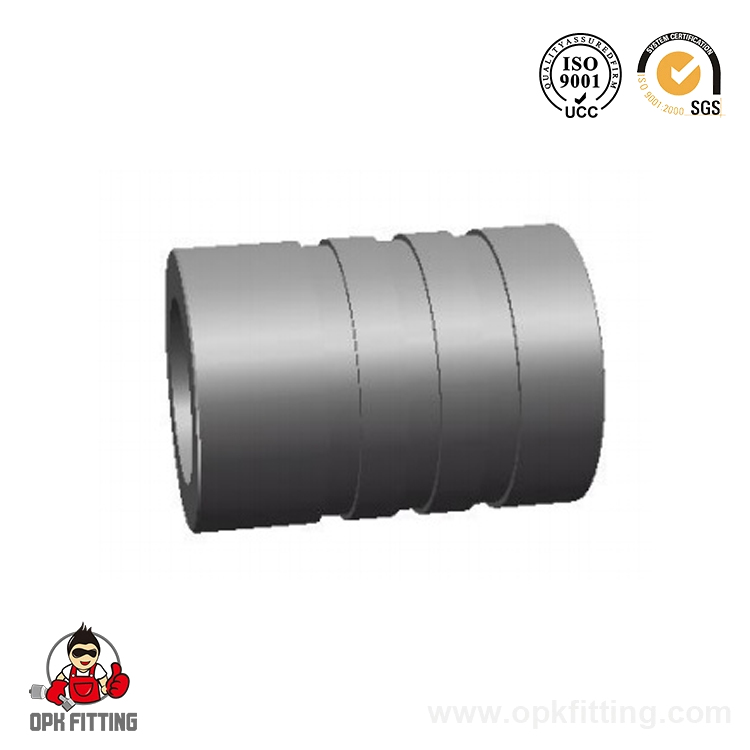
Descripción de los productos: 1. Materia prima: acero al carbono y acero inoxidable disponibles 2. Revestimiento estándar: revestimiento de z...
Ver detalles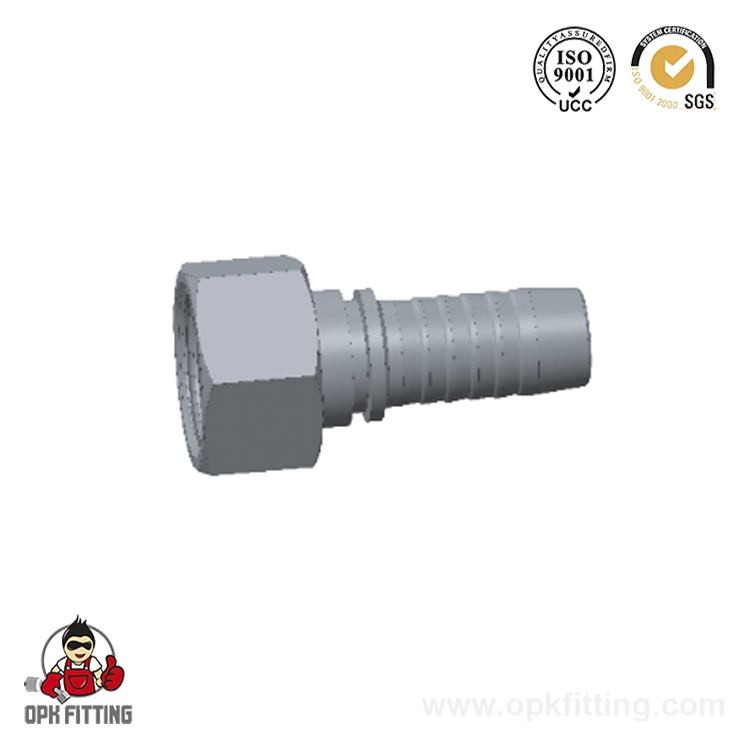
Descripción del producto Nombre del producto: Accesorios métricos para mangueras con púas/sello plano métrico (20211/20212) 1. Materia prima: acero ...
Ver detalles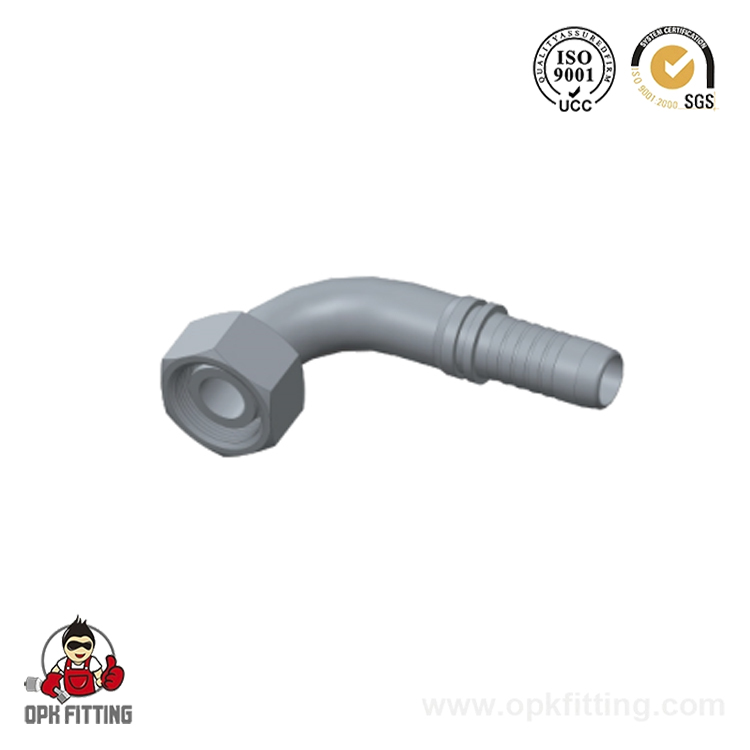
Descripción del producto Nombre del producto: Acoplamientos para mangueras hidráulicas (20491) 1. Materia prima: acero al carbono y acero ino...
Ver detalles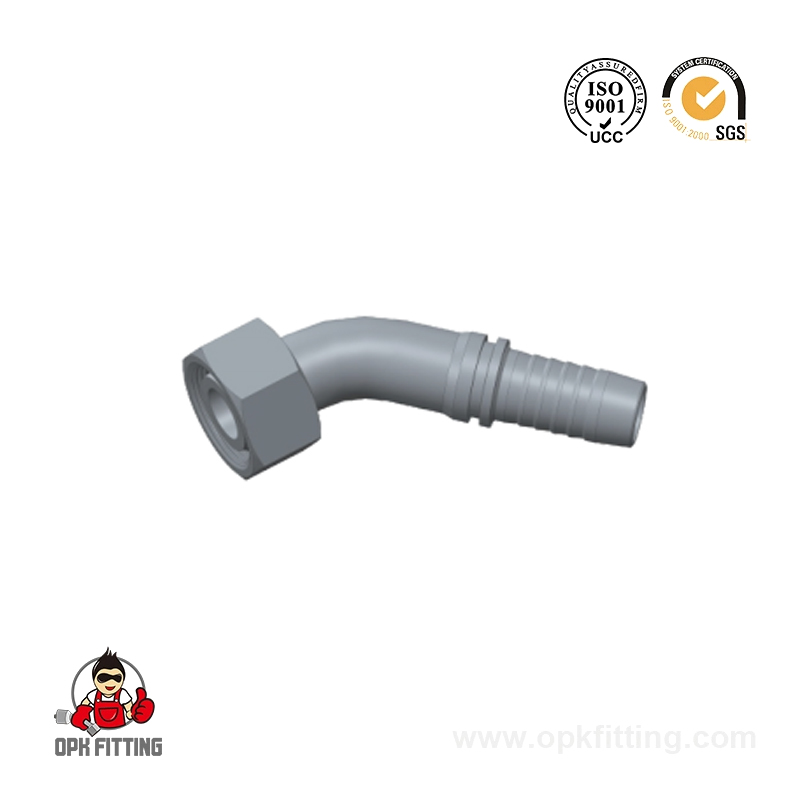
1. Materia prima: acero al carbono y acero inoxidable disponibles 2. Revestimiento estándar: revestimiento de zinc trivalente (cr3 / sin cromo),...
Ver detalles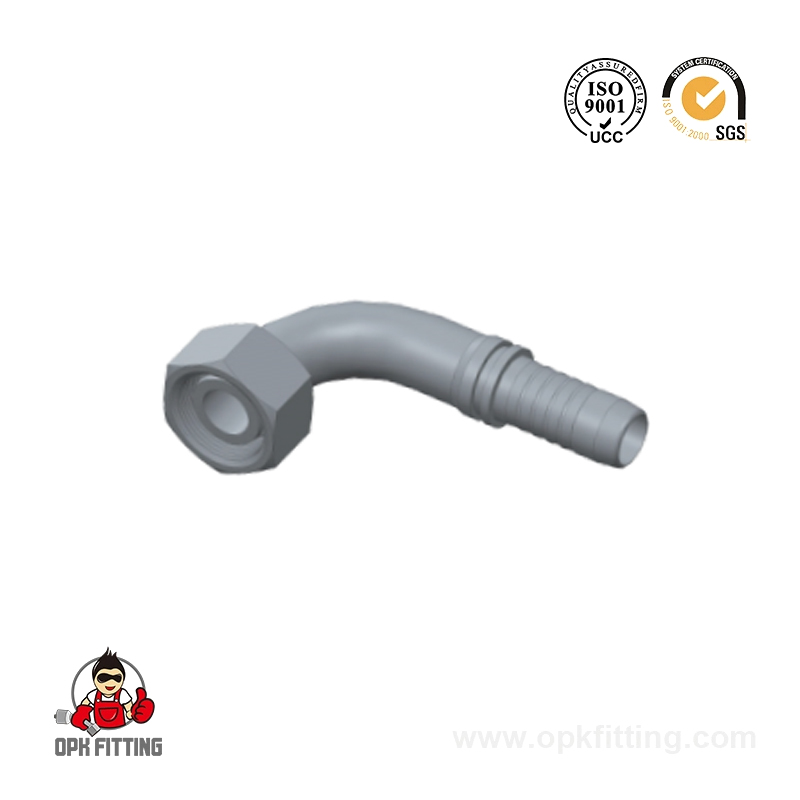
1. Materia prima: acero al carbono y acero inoxidable disponibles 2. Revestimiento estándar: revestimiento de zinc trivalente (cr3 / sin cromo),...
Ver detalles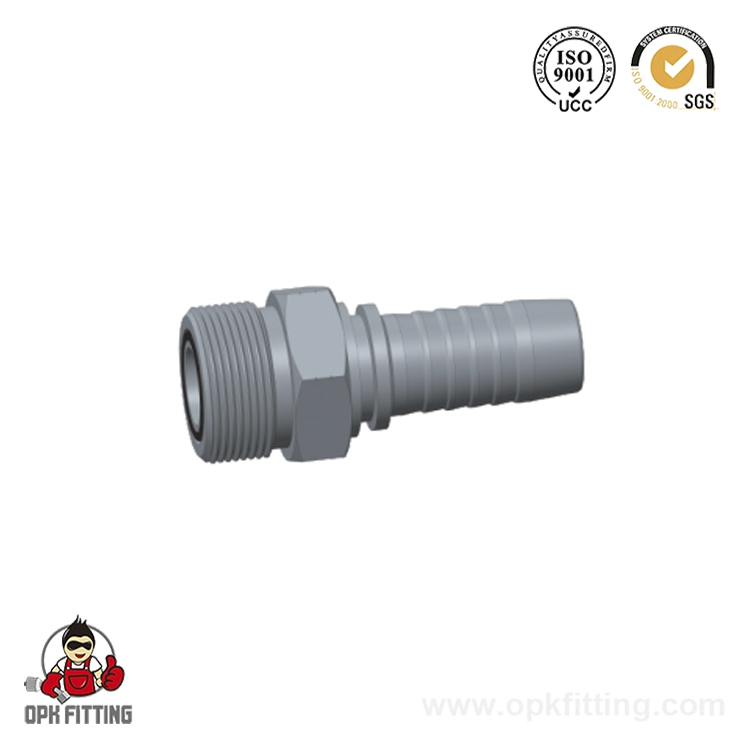
Descripción del producto Nombre del producto: 14211 Accesorio hidráulico Orfs 1. Materia prima: acero al carbono y acero inoxidable disponibl...
Ver detalles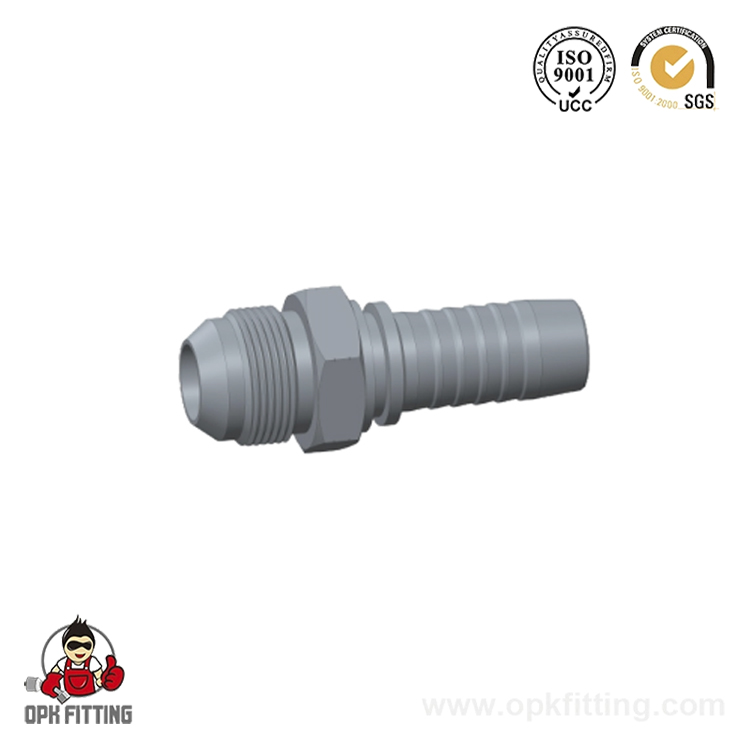
Descripción del producto Nombre del producto: Jic macho, asiento cónico de 74° – Accesorio para tubería hidráulica (16711)1. Materia prima: acero al c...
Ver detalles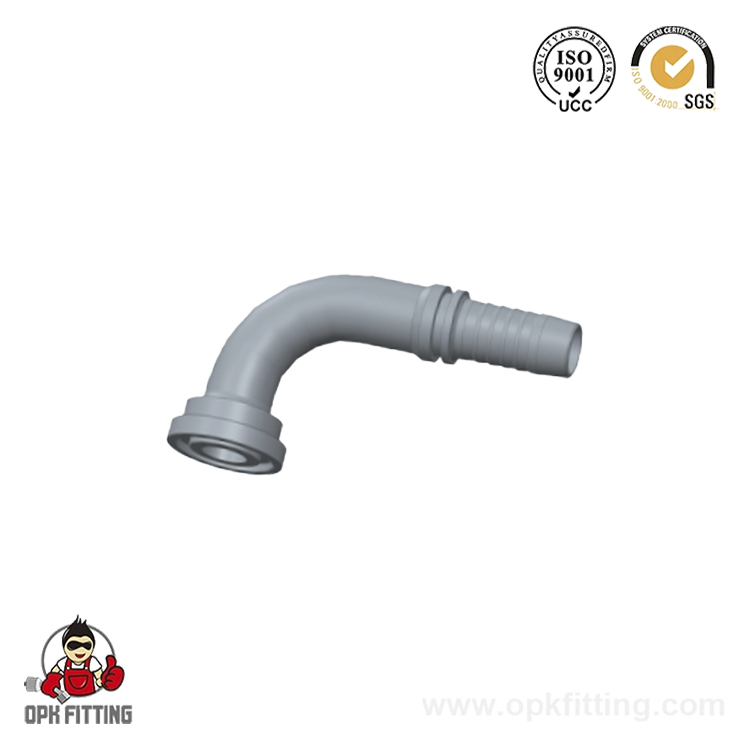
Descripción del producto Nombre del producto: Accesorio de tubería hidráulica SAE Flange 3000 Psi 87611. 87612. 87613 1. Materia prima: acero...
Ver detalles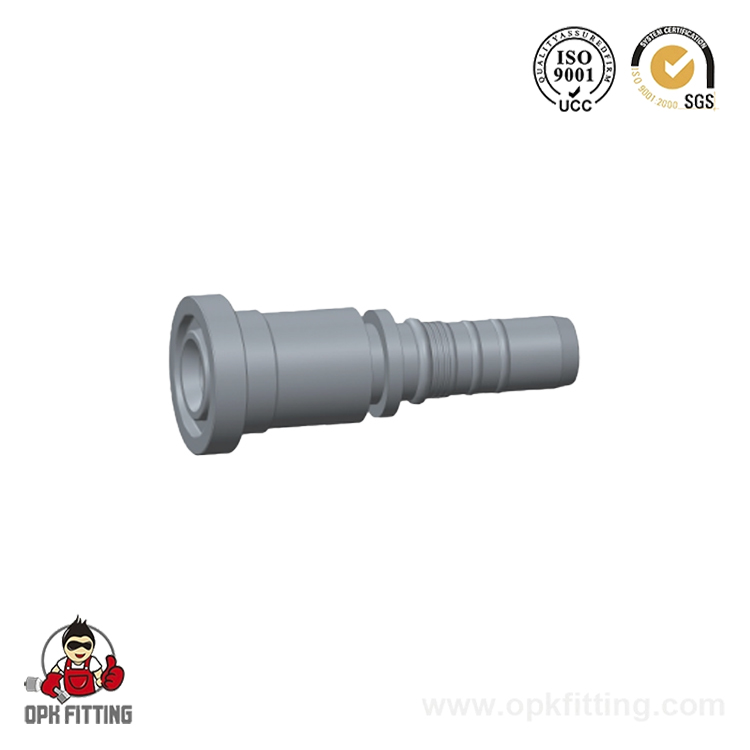
Descripción del producto Nombre del producto: Accesorios para mangueras de una sola pieza1. Materia prima: acero al carbono y acero inoxidable disponi...
Ver detalles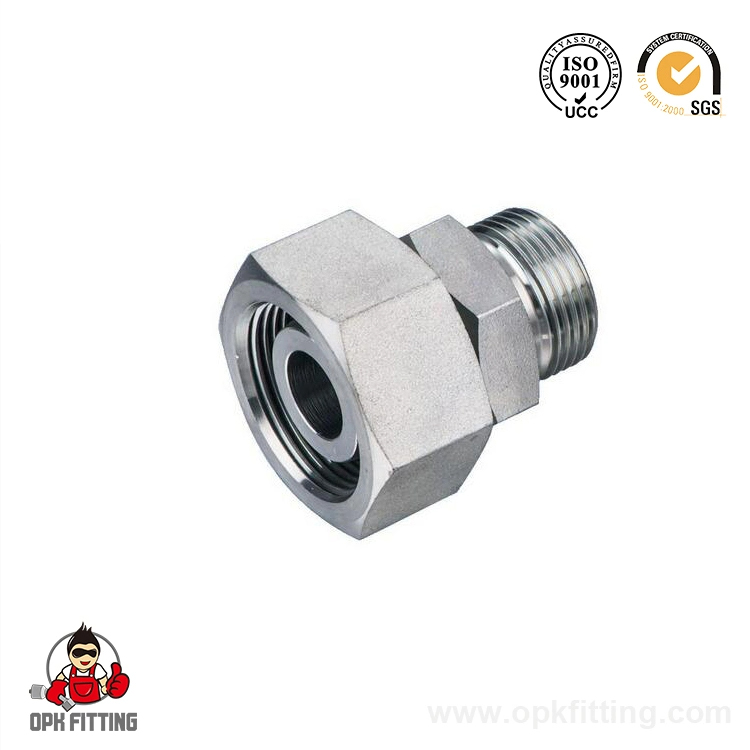
Descripción del producto Accesorios para tuberías de sellado plano con junta tórica macho métrica y adaptador hidráulico Modelo No.: 1E. 1...
Ver detalles

+86-18868902802


No. 298, Calle Chenghai, Nuevo Distrito de Binhai, Zona de Desarrollo Económico de Fenghua, Distrito de Fenghua, Ciudad de Ningbo, Provincia de Zhejiang, China
Derechos de autor @ Ningbo Opk Fitting Co., Ltd. Fabricantes de Racores para Mangueras Hidráulicas Empresa de Adaptadores OEM y Personalizados
